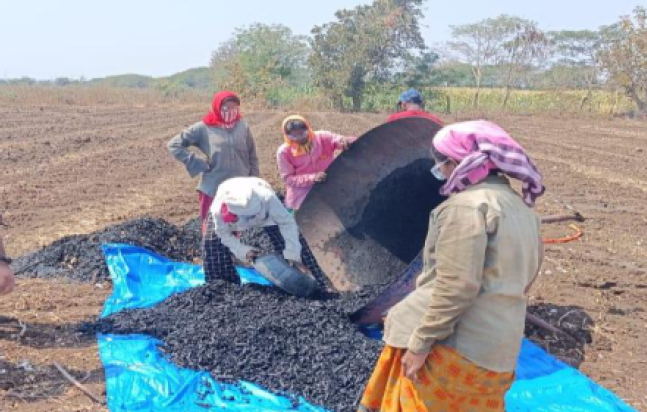
Converting Cotton Stalks into Biochar
Helping businesses and communities reduce greenhouse gas emissions.
Instead of burning crop residues, cotton stalks are converted into biochar using low-emission pyrolysis technologies. Biochar is incorporated back into agricultural fields to improve soil organic carbon, increase moisture retention, enhance nutrient availability, and sequester carbon over the long term. This creates a circular economy where agricultural waste becomes a valuable resource for improving farm productivity while reducing greenhouse gas emissions.
Cotton stalk that was burned is returned to the field, rebuilding organic carbon from the 0.69% baseline toward the ~1.5% target, raising water-holding capacity, and improving nutrient availability. The same practice that removes the residue problem also buffers the crop against erratic rain.