Tradition of Trust, Farmer First
CG Farmer Foundation is a farmer-first, impact-driven NGO working to improve the lives and livelihoods of smallholder cotton farmers, tribal women, and rural farming communities. Built on CottonGuru’s long-standing legacy and deep trust in the cotton value chain, the Foundation acts as a bridge between farmers, corporates, foundations, institutions, and development partners.
Our purpose is to become the most reliable and sought-after NGO for projects related to cotton, smallholder farmer welfare, tribal women empowerment, sustainable agriculture, and the transition from chemical-intensive farming to natural, organic, regenerative, and climate-resilient practices.
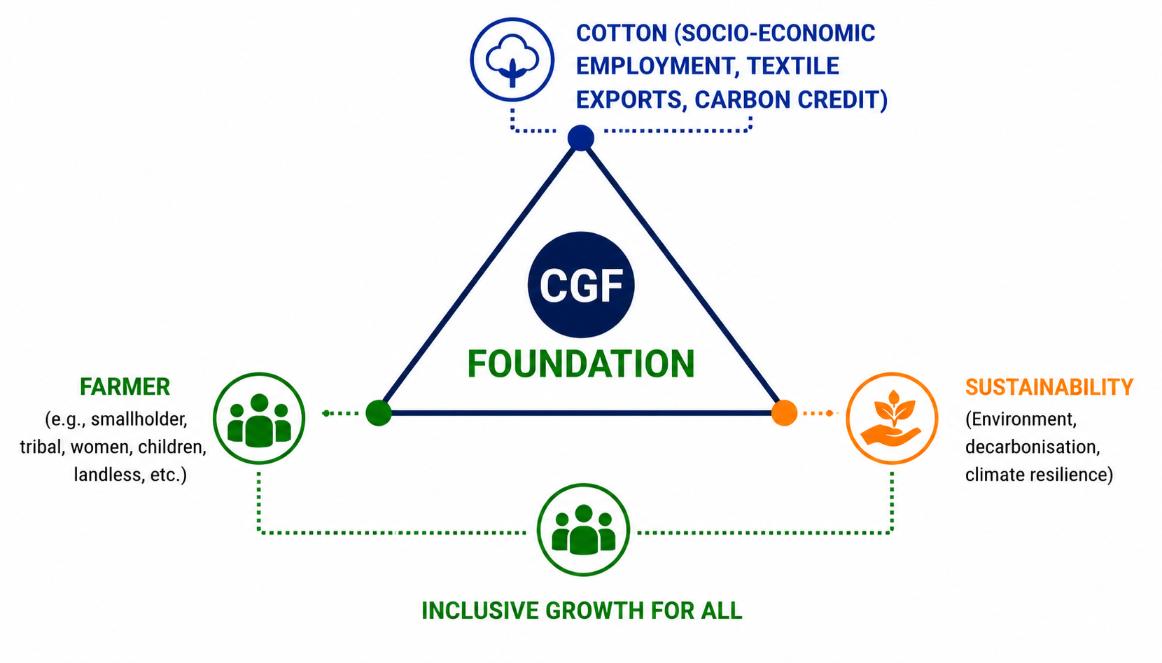
CG Farmer Foundation works at the intersection of agriculture, livelihoods, women empowerment, sustainability, and rural development. We believe that the future of cotton must be profitable for farmers, responsible for the environment, and inclusive for rural women.
Building a Sustainable Cotton Ecosystem
Our aim is to become India's most trusted implementation and impact platform for cotton-based rural development. Six priorities guide the work: farmer livelihood improvement; transition to sustainable farming; women-led rural development; demonstration-led adoption through Pradarshan Khets; climate-positive cotton communities; and CSR- and grant-backed scale.
Challenges Facing Cotton Farming
Understanding the major environmental, social and economic challenges is the first step towards building a resilient, climate-smart and sustainable cotton ecosystem.

Farmers Left to Learn on Their Own
Knowledge Challenge
- The training gap in cotton farming
- No one to ask, no time to learn
- Good practices never reach the field
- Limited access to expert guidance
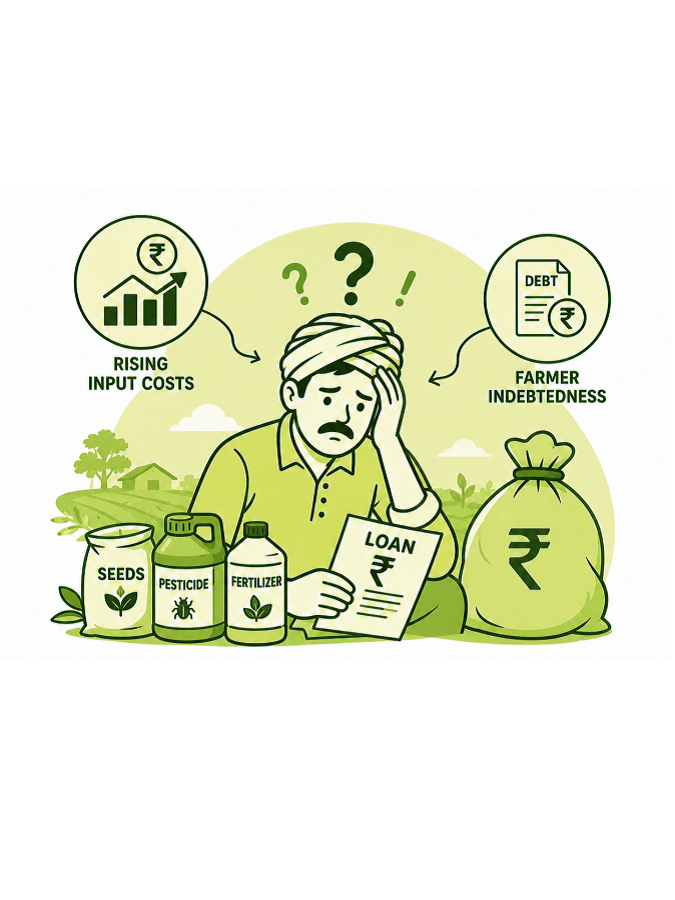
Rising Input Costs & Farmer Indebtedness
Sustainability Challenge
- High dependence on external inputs
- Increasing financial vulnerability
- Lower profitability
- Poor livelihood resilience
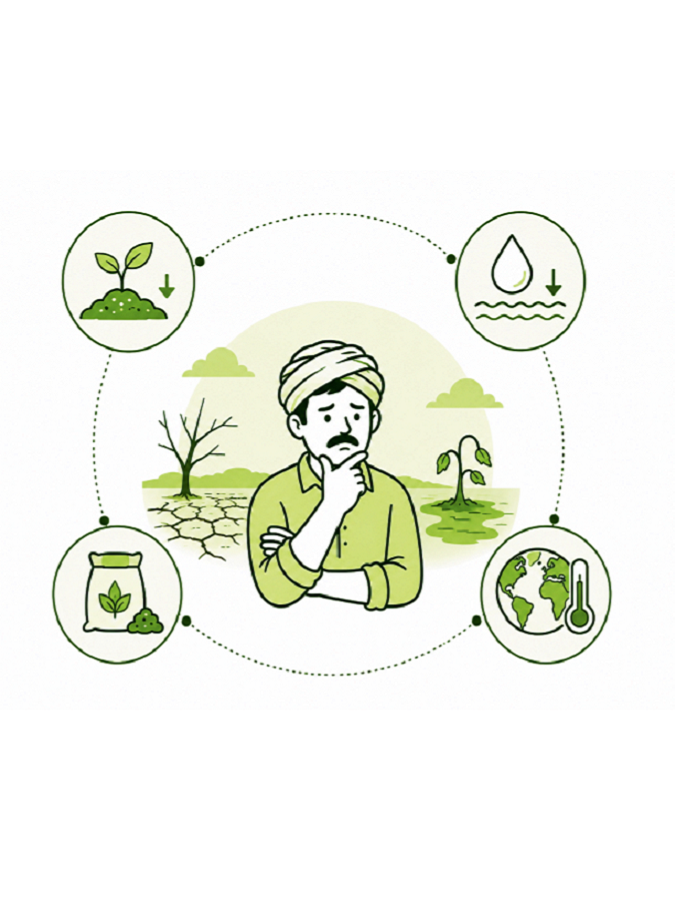
Agricultural Residue Burning
Environmental Impact
- Greenhouse gas emissions
- Air pollution
- Loss of recyclable biomass
- Missed carbon sequestration opportunities
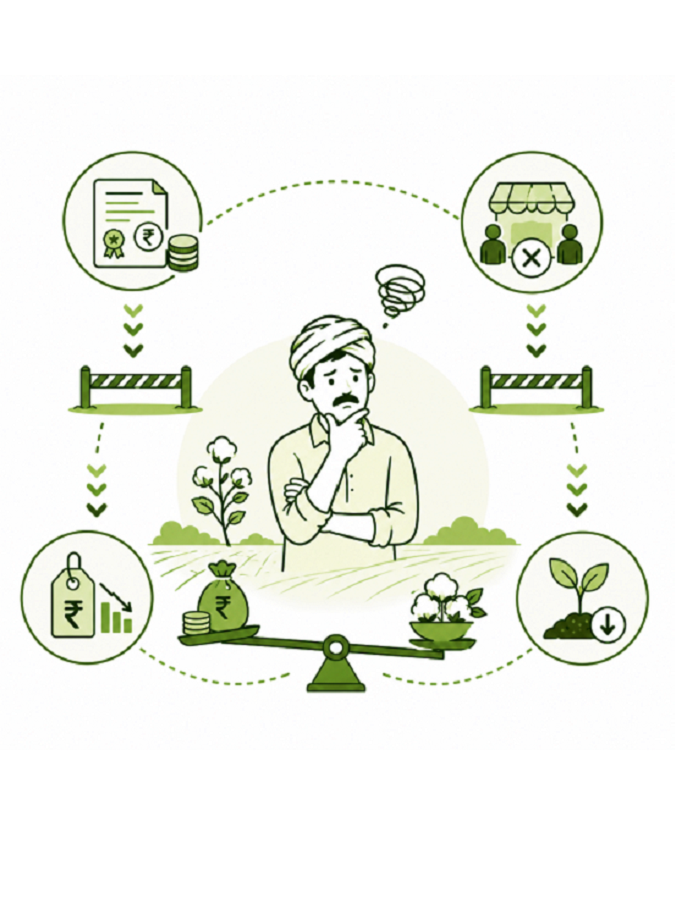
Lack of Market Incentives
Economic Challenge
- High certification costs
- Limited market access
- No premium pricing
- Low adoption of sustainable farming
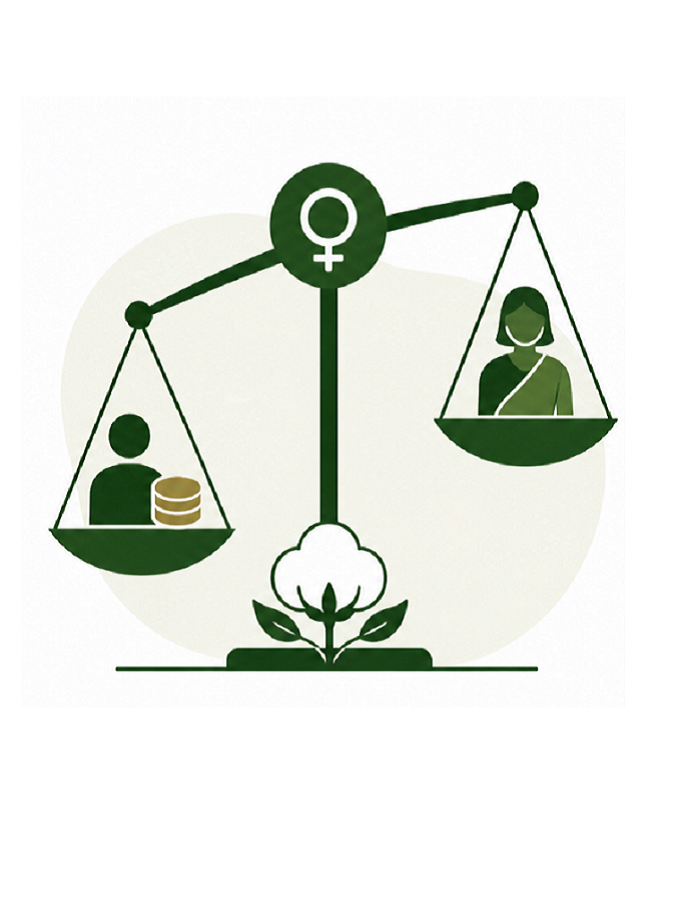
Gender Inequality in Cotton Value Chain
Social Challenge
- Limited economic empowerment
- Low participation in decision-making
- Unequal access to resources
- Women's contribution remains under-recognised
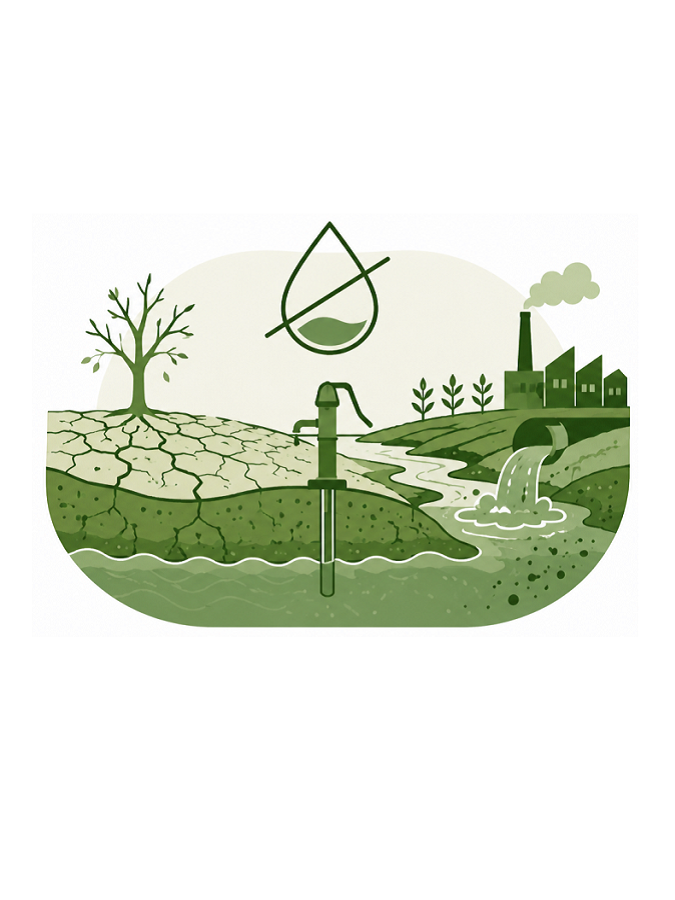
Water Insecurity
Environmental Challenge
- Degraded soil holds less water
- Contaminated groundwater
- Falling water tables
- Chemical run-off reduces water quality
Ready to Work With Us?
Whether you are a brand, a donor or a farmer we are here.